The Algorithmic Chef: How Sensor Technology is Redefining Culinary Precision
Update on Jan. 3, 2026, 6:33 p.m.
For generations, the art of grilling was defined by intuition. The “touch test” for a steak’s doneness, the visual assessment of a sear, the estimated timing based on a charcoal bed’s glow—these were skills honed over years of trial and error. Mastery was a barrier to entry. However, the modern kitchen is undergoing a quiet revolution. We are moving from an era of analog intuition to one of digital precision, driven by the integration of sensors and algorithms into everyday appliances. This shift is not merely about convenience; it represents the democratization of culinary consistency, allowing the home cook to replicate professional results through data rather than dexterity.
The Variable of Thickness: A Computational Challenge
In the equation of cooking, time and temperature are constants we can control. The variable that most often leads to failure—undercooked centers or overcooked, dry exteriors—is the geometry of the ingredient itself. A chicken breast is rarely uniform; a ribeye steak varies in thickness from edge to center. Traditional recipes offering static instructions like “cook for 4 minutes per side” fail to account for these physical variances.
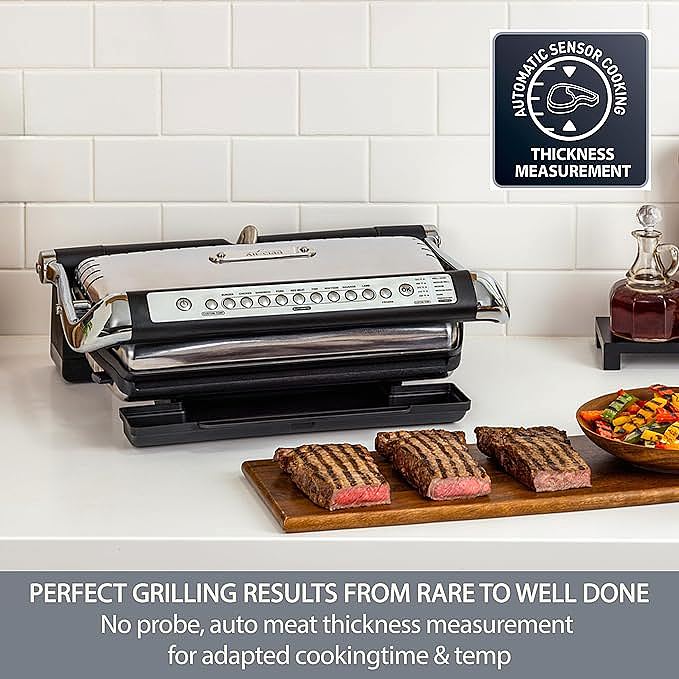
Smart appliances, such as the All-Clad PG715851 AutoSense Stainless Steel Indoor Grill, address this variability through dimensional sensing. When the lid of such a device is lowered, internal sensors (often utilizing electromechanical or capacitive mechanisms) measure the precise distance between the plates. This data point—thickness—is the critical input for the cooking algorithm.
By digitizing the physical dimensions of the food, the appliance’s processor can calculate the thermal diffusivity required. It determines exactly how long it will take for heat to travel from the surface to the thermal center of the food item based on its specific density (meat type) and thickness. This is a fundamental application of the heat equation in physics, automated for the kitchen counter. The result is a dynamic cooking cycle that adjusts in real-time, removing the guesswork that has historically plagued home grilling.
Protein Denaturation and the Spectrum of Doneness
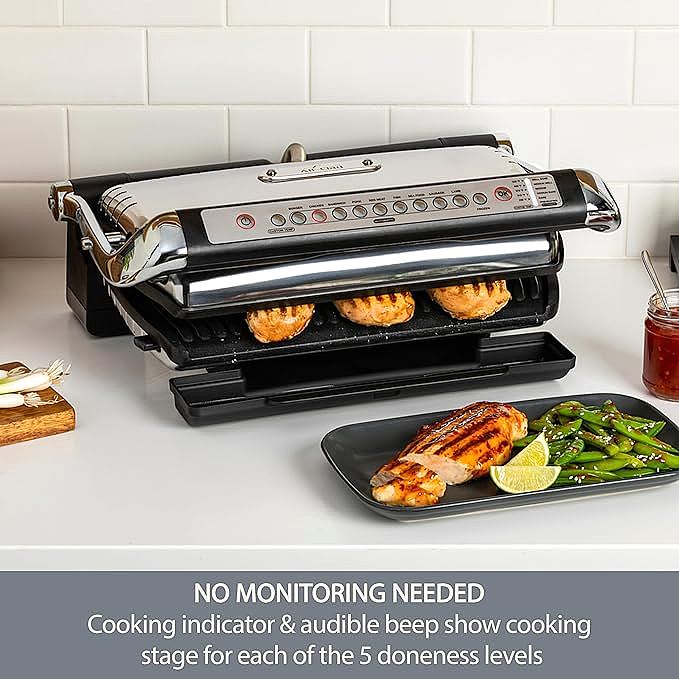
The ultimate goal of this algorithmic approach is to precisely control protein denaturation. Meat “cooks” when heat causes its protein strands to unwind and recombine (coagulate). This process happens at specific temperature thresholds: * Myosin begins to denature around 50°C (122°F), changing meat from raw to rare. * Collagen starts shrinking and squeezing out moisture around 60°C (140°F), signaling medium doneness. * Actin denatures around 66°C (150°F), leading to the firm, dry texture of well-done meat.
The window between a juicy medium-rare and a dry medium-well can be a matter of seconds or a few degrees. Automated systems map these biochemical milestones to visual or auditory indicators. Instead of relying on a clock, the appliance tracks the thermal energy transfer. The “AutoSense” technology found in the All-Clad model effectively creates a digital feedback loop, monitoring the progress of denaturation and alerting the user at the exact moment a specific biochemical state is reached. This transforms the cook from a passive observer guessing at internal states to an informed operator acting on precise data.
The Skill Gap and Technology’s Role
Critics of kitchen automation often argue that it erodes traditional cooking skills. However, a counter-perspective suggests that technology bridges the skill gap. Understanding the theory of cooking is different from having the physical practice to execute it. A novice may know they want a medium-rare burger but lacks the sensory experience to identify it by touch.
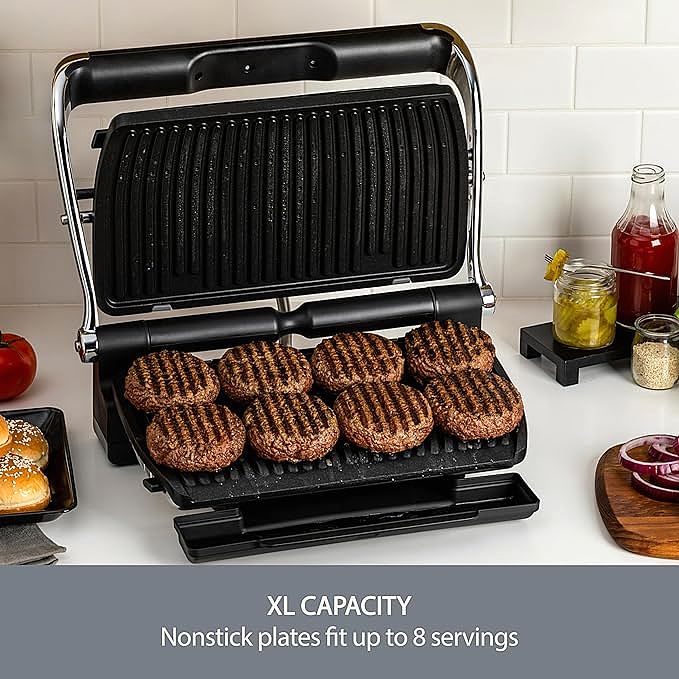
By offloading the monitoring variable to a machine, the user is free to focus on other aspects of the meal—flavor profiling, side dishes, or simply the social experience of dining. In this context, the appliance becomes a sous-chef. It handles the technical execution of thermal processing, ensuring safety (killing pathogens) and quality (texture retention), while the human retains control over the creative menu planning. The reliability provided by systems like the All-Clad PG715851 encourages experimentation; users are more likely to purchase expensive cuts of meat or try new proteins if they have confidence that the cooking process will not result in expensive waste.
Conclusion: The Future of the Smart Kitchen
The trajectory of kitchen technology is clear: appliances are becoming smarter, more connected, and more autonomous. The integration of thickness sensors and adaptive cooking programs is just the beginning. As these technologies mature, we can expect even greater precision, perhaps integrating with food thermometers or weight sensors for a holistic view of the cooking process.
The digitization of grilling does not replace the joy of cooking; it enhances it by removing the anxiety of failure. It ensures that the science of thermodynamics is applied correctly every time, allowing the art of flavor to take center stage. In the modern home, the best chef might just be an algorithm.


